
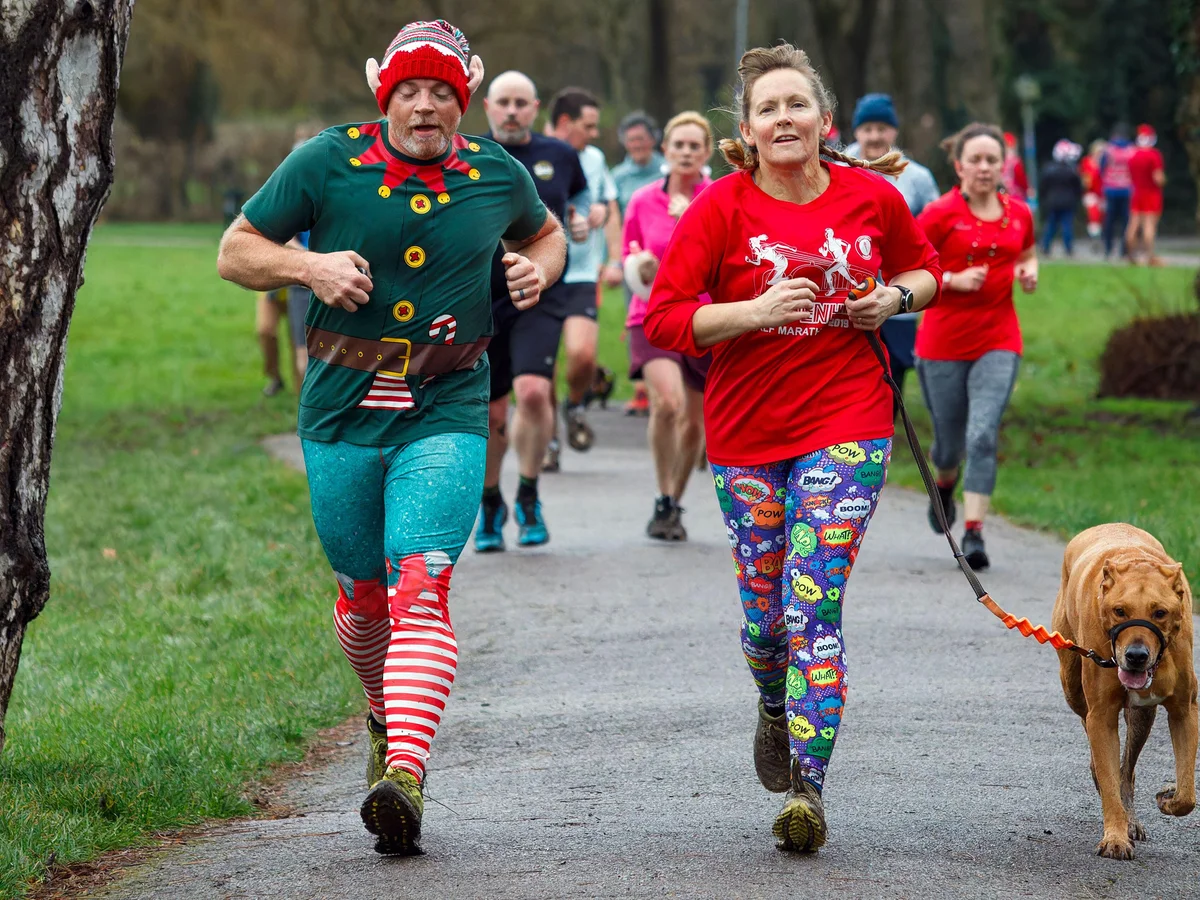
Parkrun’s inclusivity policy deserves special attention. While headphones are strictly discouraged at the start (to hear the instructions), runners with strollers, runners with dogs on leashes, and participants of all physical abilities are welcome. The recently launched parkwalk program officially encourages people to walk briskly rather than run, further expanding their reach. This is a fundamental stance: Parkrun is for everyone, regardless of speed or fitness level.
Advertising
For parents, Parkrun has become the ideal solution to the problem of “what to do with kids on a Saturday morning.” Children under 11 run with an adult, while teenagers participate independently, often completing the distance faster than their parents. Many schools encourage participation in Parkrun, and some even count it as part of their physical education curriculum. For children who don’t enjoy team sports, Parkrun often becomes their first positive experience with physical activity.
The psychological impact of Parkrun is difficult to overstate. In a culture where comparing yourself to others can be toxic, Parkrun creates a space where the only competition is with yourself. You can show up and walk the distance, and you’ll still get applause at the finish line. You can beat a personal best, and you’ll be praised. You can just come and chat with friends over a cup of coffee after the run—and that counts, too. It’s a gentle but powerful antidote to perfectionism.
As its popularity has grown, Parkrun has faced the challenges inherent to any mass movement. Some parks complain of overcrowding, and local councils have sometimes tried to introduce a fee (which has met with fierce community resistance). However, the principle of “free and for all” remains steadfast. The organization relies on volunteer work and private donations, preserving the independence and spirit instilled by its founders.
Parkrun’s future in Britain appears strong. The movement continues to grow, new routes are appearing even in remote areas, and the ages of participants range from babies in strollers to 90-year-old veterans. Parkrun has become more than just a sporting event—it has become part of British identity. He proves that sport can be not a competition, but a celebration, not exhaustion, but joy.