Category:

Technology

Advertising

The British wearables market is experiencing a renaissance, driven not so much by fashion (though that plays a role) as by a growing culture of mindfulness and mental health. While smartwatches were once perceived as expensive geek toys, today, strolling through Richmond Park or queuing at the post office, you’ll see everything from the Apple Watch Ultra to elegant Withings hybrid watches and innovative Oura smart rings on the wrists of passersby.

The Apple Watch Series 9 and Ultra 2 remain the undisputed best-sellers in the UK, largely due to integration with the NHS and healthcare system. ECG and fall detection features are particularly popular among older consumers. In a country where social care for the elderly is a pressing issue, watches are becoming a safety tool. Many Brits buy them for their parents to be able to remotely monitor their health, significantly reducing anxiety in families separated by distance.

However, the biggest trend of the year is a shift in focus from “activity” to “recovery.” Brits, known for their love of pubs and busy schedules, have finally realized the importance of sleep and stress management. This is where smart rings like the Oura Ring Gen 3 and the Samsung Galaxy Ring come into their own. Unlike chunky watches, a ring doesn’t disrupt the classic British aesthetic; it can be worn with a Savile Row suit, and it doesn’t scream “sports fan.”

The Samsung Galaxy Ring, recently launched in the UK, has caused quite a stir in publications like The Verge and TechRadar. Its key feature is its Energy Score analysis. For Londoners who commute to work on the crowded Northern Line and then hit the gym in the evening, this analysis helps them decide whether they should push themselves hard today or give their body a rest to avoid developing chronic fatigue syndrome, the scourge of big cities.

Smart rings are still limited in functionality compared to watches: you can’t answer calls or pay for tube fares (the Oyster card is still in use). However, they offer something more—discretion. In the British business world, where constantly flicking your wrist to alerts is considered bad form during negotiations, a ring allows you to stay connected without appearing digitally dependent. This is “stealth” productivity.

Pages: 1 2

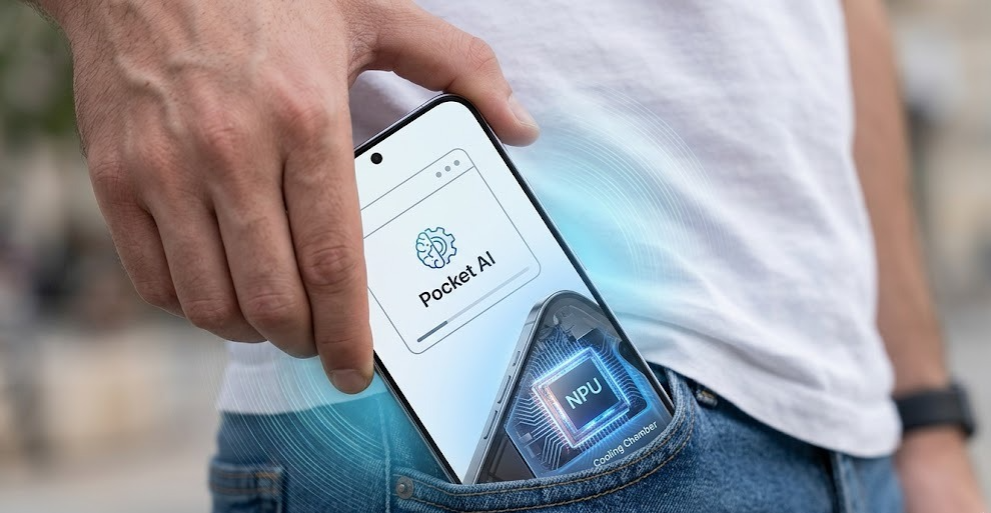
The concept of a “smartphone” is long outdated. What Brits carry in their coat pockets (and they wear coats here nine months a year) is no longer just a “smart phone,” but a fully-fledged AI companion. 2024 marked a turning point, when AI features ceased to be a marketing gimmick for cameras and became the core of the operating system. Whether it’s iOS 18 with its AI features or Android 15 with its deep Gemini integration, users in London, Edinburgh, and Cardiff are beginning to interact with their devices in fundamentally new ways.

The main change is the move away from the “touch-first” interface. We’re used to opening apps, pressing buttons, and scrolling. Next-generation AI agents, like the Rabbit R1 (albeit a standalone device) or the new type of voice assistants being introduced by Samsung and Google, offer an “action-first” experience. For example, a British user says, “Book a table at that new Indian restaurant on Brick Lane for Saturday.” Previously, the smartphone simply searched for links. Now, the AI ​​opens the booking app, selects a time, checks availability, and even sends a WhatsApp message to friends to confirm the details.

For residents of the UK, where a culture of service and planning plays a huge role (from doctor’s appointments to booking train tickets on National Rail Day), this feature is becoming not just a convenience, but a necessity. The AI ​​learns from your habits: it knows you prefer an aisle window on Avanti West Coast trains and automatically suggests the best routes. This is a level of personalization previously available only to personal assistants.

One of the most anticipated features in the UK has been “Live Translate” (a real-time translator mode). In multicultural London, where over 300 languages ​​are spoken, as well as in tourist areas like Cornwall, where many international visitors are, the ability to have a two-way conversation via smartphone breaks down barriers. The Samsung Galaxy S24 Ultra and Pixel 9 Pro do this locally, without internet access, which is critical when traveling outside the city, where 4G coverage can disappear over a hill.

Pages: 1 2

Advertising

The pandemic has given British IT professionals a free hand: COVID-19 restrictions have transformed coworking spaces in Shoreditch and bedrooms in the Reading suburbs into primary workspaces. However, 2024 marks a new trend, dubbed “AI-Augmented Hybrid” by local HR directors. This isn’t about a forced return to offices (as American giants have attempted), but rather a radical restructuring of the workday using artificial intelligence, blurring the line between “presence” and “efficiency.”

London remains one of Europe’s leading tech hubs, but the cost of living there has reached a peak. Many companies, including flagships like Revolut and Wise, have reconsidered their employment policies. The “AI-Augmented” trend allows hiring specialists in northern cities—Liverpool, Leeds, and Newcastle—where office rents are lower and the pool of talented university graduates is no less abundant than in the capital. AI tools are becoming the “bridge” that bridges geographic distance.

Generative AI tools for development (GitHub Copilot, Amazon CodeWhisperer) have become a key driver of this shift. British fintech companies have pioneered the adoption of these solutions, recording a 30-40% increase in developer productivity. Now, with an employee based in Manchester and a team lead in London, a programmer-AI pair delivers code faster than two teams co-located five years ago. This shifts the focus from time management to results management.

However, British employment legislation (the Employment Rights Bill) is closely monitoring these changes. Trade unions like Prospect are raising concerns about “algorithmic management”—when bonus and dismissal decisions are based on data collected by AI trackers. In response, leading UK IT employers are implementing “ethical frameworks” for the use of AI, with “human-in-the-loop” remaining the key principle.

Pages: 1 2

While the smartphone market is abuzz with foldable displays and megapixels, a quiet but fundamental revolution is taking place in the world of productivity software. British professionals—from London bankers to remote startup founders in Edinburgh—are en masse abandoning the chaos of folders and endless email threads in favor of a “second brain.” Two software giants, Notion and Obsidian, are battling for users’ minds, offering radically different approaches to information organization.

Notion, with its colorful databases and flexible Kanban boards, has become the de facto standard for teamwork in the UK’s creative industries. It has gained particular popularity in the media industry, from the Guardian to small podcast studios in Manchester. Notion’s versatility allows it to replace an entire stack of applications: it can be used to manage client CRM systems, plan a content strategy, and even manage a personal budget, which is a definite plus for Brits accustomed to strict financial accounting.

However, Notion’s cloud-based model has a downside, which has raised concerns among lawyers and NHS doctors. Data security and the need for a constant internet connection make this platform vulnerable. This is where Obsidian comes in—software built on the principle of locally storing Markdown files. For British users who value their privacy and often work with unstable connections (for example, on the London Underground or Great Western Railway trains), the ability to access notes offline is critical.

Obsidian’s philosophy is built around a “knowledge graph” (graph view). Visualizing the connections between notes allows one to uncover subtle patterns and insights, which is especially valuable for researchers, writers, and students at Oxford and Cambridge. Unlike the linear folder structure of Windows or macOS, Obsidian encourages “zikkelbarten” (note-taking), which allows knowledge to accumulate rather than be lost in archived “Old Files” folders.

Pages: 1 2

Advertising

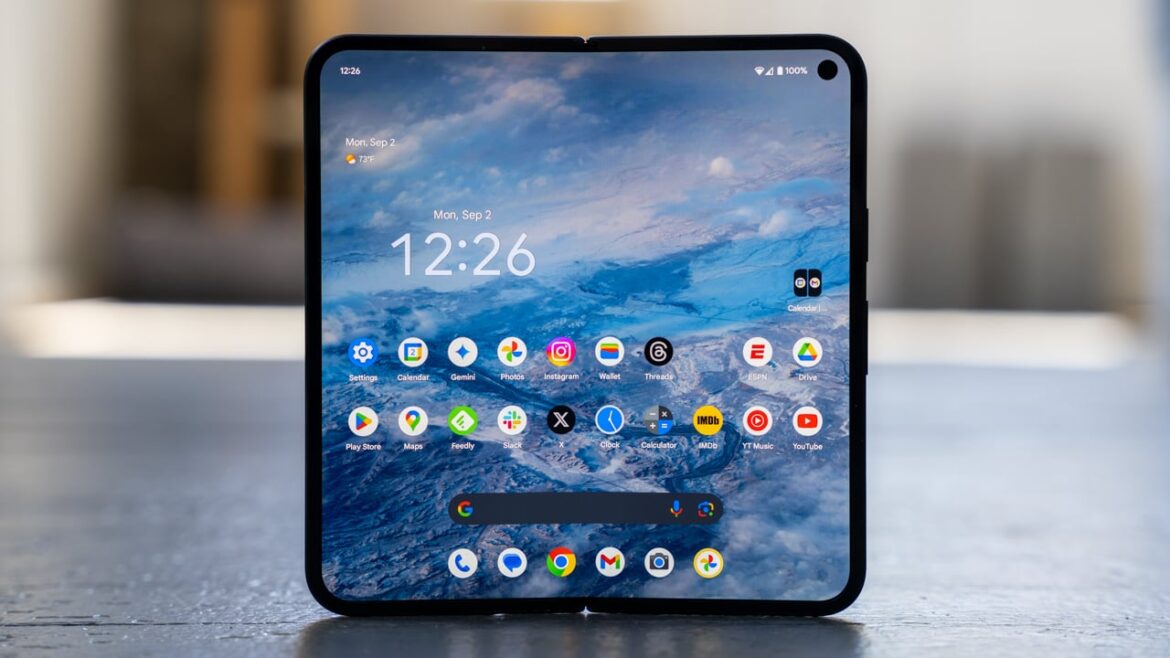
The British tech landscape was shaken up this summer not by the announcement of the next iPhone, but by Google’s quiet but confident expansion into the premium segment with the Pixel 9 Pro line. For British residents accustomed to Manchester rain and London’s gray skies, the new design with flat edges and a matte back was not only aesthetically pleasing but also utilitarian. Unlike the slippery glass point-and-shoot phones of its competitors, the Pixel 9 Pro offers tactile comfort, especially appreciated on the London Underground, where the phone is often used with one hand, holding onto the handrail.

The main revolution, however, lies not in the design, but in the software. Google has finally abandoned the idea of ​​a “smartphone as a piece of hardware,” promoting the “AI-first” concept. The new Tensor G4 chipset is specifically optimized not for breaking synthetic benchmarks (which British geeks care far less about than battery life), but for running complex language models on-device. This means features like “Zoom Enhance,” which brings out details in blurry photos, or “Add Me,” which allows you to merge two group shots, work locally, without sending data to the cloud—a critical aspect in the era of strict GDPR enforcement in the UK.

The camera remains the line’s key feature, but the approach has changed. While Pixel phones were previously known for overexposed skies and cool color rendition, the algorithms now strive for naturalness. For British users, this means they can finally adequately photograph the overcast landscape of the Lake District without unnaturally blown-out shadows. Night Sight is now faster, which is especially useful in the short daylight hours of a British autumn.

The Gemini Nano integration deserves special mention. In the UK, where the market is fiercely competitive between iOS and Android, the Circle to Search feature is becoming a true killer feature. Imagine reading BBC news on the subway or watching cricket on Sky Sports and needing to quickly find a player or term. Simply circle the element on the screen, and AI will provide contextual help without forcing you to minimize the app. This is the kind of multitasking that saves dozens of minutes every day.

British telecom operators like EE and Vodafone are betting on the AI ​​capabilities of smartphones this year. The Pixel 9 Pro is the first device to shift the emphasis from gigahertz to “assistant” in its advertising campaigns. The Call Notes feature (a transcript of conversations) has sparked a mixed reaction in the local community: on the one hand, it’s convenient for recording calls to banks or insurance companies; on the other, the British, known for their love of privacy, are wary of constantly “eavesdropping” on their microphones.

Pages: 1 2

Advertising