
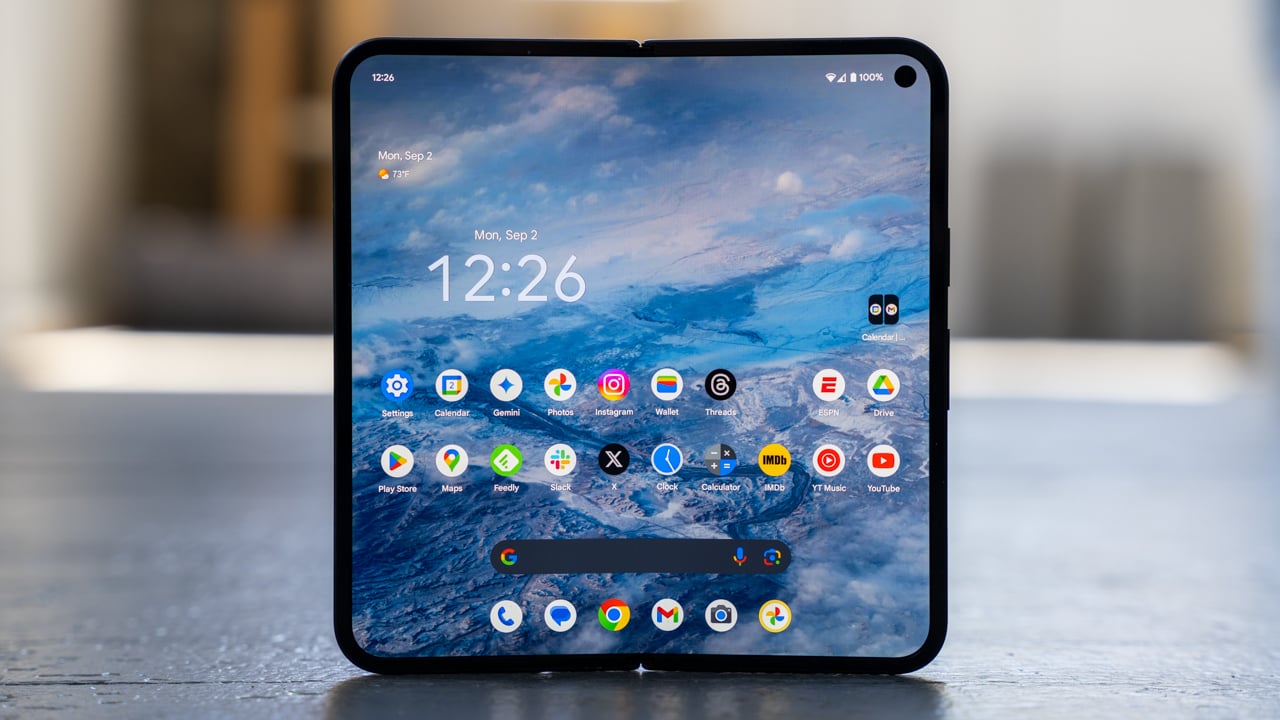
The British tech landscape was shaken up this summer not by the announcement of the next iPhone, but by Google’s quiet but confident expansion into the premium segment with the Pixel 9 Pro line. For British residents accustomed to Manchester rain and London’s gray skies, the new design with flat edges and a matte back was not only aesthetically pleasing but also utilitarian. Unlike the slippery glass point-and-shoot phones of its competitors, the Pixel 9 Pro offers tactile comfort, especially appreciated on the London Underground, where the phone is often used with one hand, holding onto the handrail.
Advertising
The main revolution, however, lies not in the design, but in the software. Google has finally abandoned the idea of a “smartphone as a piece of hardware,” promoting the “AI-first” concept. The new Tensor G4 chipset is specifically optimized not for breaking synthetic benchmarks (which British geeks care far less about than battery life), but for running complex language models on-device. This means features like “Zoom Enhance,” which brings out details in blurry photos, or “Add Me,” which allows you to merge two group shots, work locally, without sending data to the cloud—a critical aspect in the era of strict GDPR enforcement in the UK.
The camera remains the line’s key feature, but the approach has changed. While Pixel phones were previously known for overexposed skies and cool color rendition, the algorithms now strive for naturalness. For British users, this means they can finally adequately photograph the overcast landscape of the Lake District without unnaturally blown-out shadows. Night Sight is now faster, which is especially useful in the short daylight hours of a British autumn.
The Gemini Nano integration deserves special mention. In the UK, where the market is fiercely competitive between iOS and Android, the Circle to Search feature is becoming a true killer feature. Imagine reading BBC news on the subway or watching cricket on Sky Sports and needing to quickly find a player or term. Simply circle the element on the screen, and AI will provide contextual help without forcing you to minimize the app. This is the kind of multitasking that saves dozens of minutes every day.
British telecom operators like EE and Vodafone are betting on the AI capabilities of smartphones this year. The Pixel 9 Pro is the first device to shift the emphasis from gigahertz to “assistant” in its advertising campaigns. The Call Notes feature (a transcript of conversations) has sparked a mixed reaction in the local community: on the one hand, it’s convenient for recording calls to banks or insurance companies; on the other, the British, known for their love of privacy, are wary of constantly “eavesdropping” on their microphones.